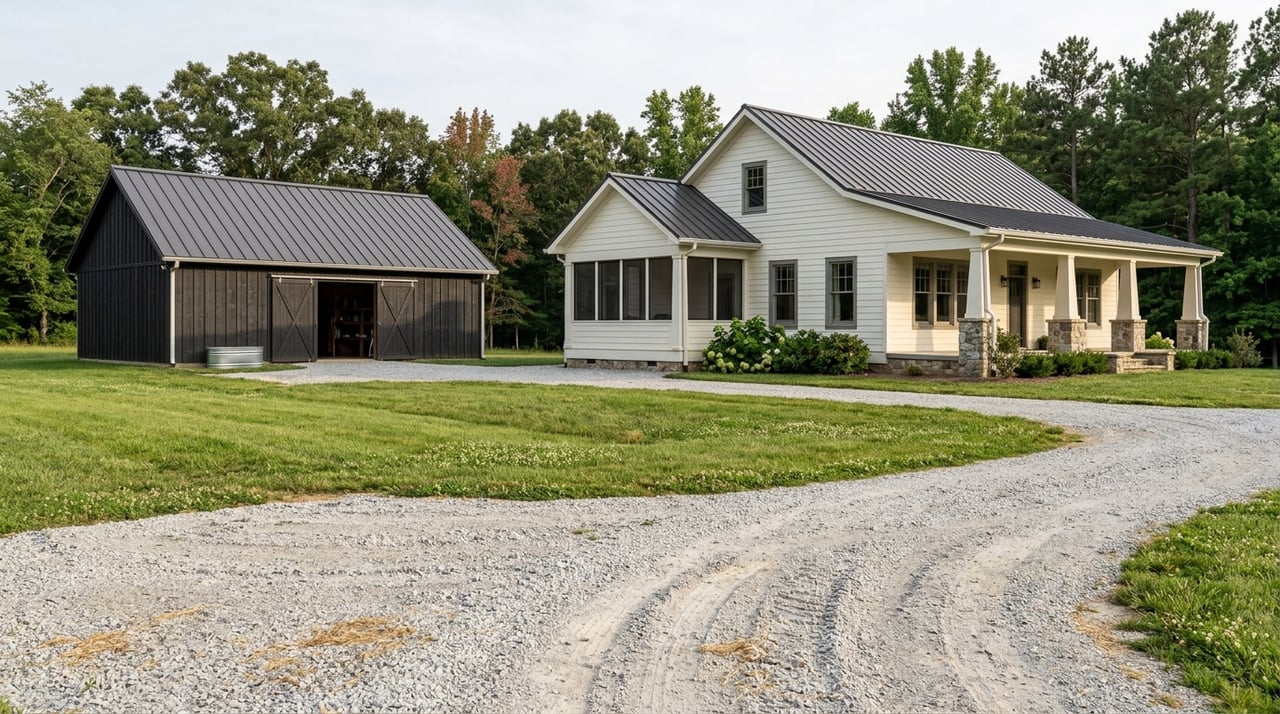
If you are dreaming about a horse property in Mill Spring, it helps to look past the listing photos and ask a bigger question: will the land actually work for your horses every day? That is often where acreage searches get tricky, especially for buyers relocating to the foothills or moving up from a smaller property. In this guide, you will learn what makes Mill Spring appealing, what to evaluate before you buy, and how to spot the difference between land that looks good on paper and land that truly supports an equestrian lifestyle. Let’s dive in.
Why Mill Spring Appeals to Horse Buyers
Mill Spring sits in Polk County, where the landscape ranges from lower land to foothills terrain. County sources describe a setting shaped by forest, elevation changes, and a thermal belt that can moderate temperatures and lengthen the growing season. That combination helps explain why the area stands out to buyers looking for pasture-oriented acreage and a foothills lifestyle.
Agriculture is also a long-standing part of Polk County’s identity. County farmland-preservation materials describe active farming across tens of thousands of acres, with many farms made up of a mix of tilled ground, pasture, and forest land. Historically, the county has also been recognized for hay production and a strong equine presence, which gives helpful context for why horse properties remain such an important part of the local market.
For many buyers, Mill Spring offers a balance that can be hard to find. You get a rural, land-focused setting, but you are also buying into an area where horse ownership is already part of daily life. That matters when you are evaluating not just a home, but the long-term fit for your animals, routines, and goals.
Focus on Usable Acreage
One of the biggest mistakes horse buyers make is assuming deeded acreage and usable acreage are the same thing. They are not. In Mill Spring and greater Polk County, terrain can vary quite a bit from one parcel to the next, and larger tracts often include a mix of steeper wooded sections and gentler open ground.
That matters because your horses need land that functions well, not just land that adds up to a big number on paper. NC State Extension guidance says a 1,000-pound horse generally needs about 2 to 3 acres of pasture for maintenance. If part of a parcel is steep, heavily wooded, wet, or hard to fence, that land may be better suited for buffers, woods, or riding lanes rather than turnout.
When you tour a property, try to separate the total acreage from the daily-use acreage. Ask yourself how much of the land could realistically serve as pasture, paddocks, dry lots, barn area, or access routes. A beautiful tract can still be a poor fit if the usable portion is much smaller than it first appears.
Questions to Ask About the Land
- How much of the acreage is open versus wooded?
- How much ground is gently sloped and workable for pasture use?
- Are there wet areas, drainage paths, creeks, or low spots?
- Is there enough practical space for turnout, a dry lot, and barn support areas?
- Would the layout make fencing and daily chores manageable?
Pasture Layout Matters More Than You Think
A horse property is not just about how much land you have. It is also about how the land is arranged. Pasture layout can affect everything from your feeding routine to hoof health to how much time and money you spend managing mud and wear.
NC State Extension equine guidance highlights horse fencing, dry lots, and water intake as key topics for horse properties. Polk County Extension also recommends placing sacrifice paddocks or dry lots on higher ground and away from ditches, creeks, or other water bodies. That guidance is especially useful in the foothills, where slope and water movement can quickly turn the wrong area into a muddy problem spot.
Cross-fencing and rotational grazing are also worth thinking about before you buy. Polk County Extension notes that these practices can help reduce overgrazing, soil compaction, erosion, and nutrient runoff. If a property already has a workable layout for rotation, that can be a real advantage.
Features That Can Improve Day-to-Day Horse Use
- Multiple pasture sections for rotation
- A dry lot or sacrifice area on higher ground
- Easy water access for horses
- Shade options in turnout areas
- Logical fencing lines that match the land’s slope and shape
- Enough room between the house, barn, and turnout areas for smooth daily flow
Pay Attention to Drainage and Mud Control
In foothills acreage, mud control is not a small detail. It can affect horse health, pasture condition, maintenance costs, and your overall enjoyment of the property. A parcel that feels open and attractive during a dry showing can behave very differently after rain.
Polk County Extension recommends gutters and roof systems on barns, sheds, and outbuildings to keep clean rainwater off high-traffic areas. It also recommends gravel or rock-dust pads near gates and other spots where horses gather and churn up the ground. These are practical features that can make a major difference in how manageable a property feels through the seasons.
As you evaluate a property, pay close attention to gate areas, barn entrances, feeding zones, and paths between turnout spaces. These are often the first places where drainage issues show up. A property does not need to be perfect on day one, but you should understand where improvements may be needed and whether the layout supports those fixes.
Consider Access for Hauling and Events
If you trailer often, Mill Spring has an obvious local advantage. Tryon International Equestrian Center & Resort is located in Mill Spring at 25 International Blvd., just off Exit 170 on US 74 in the Blue Ridge foothills. For buyers who attend shows, haul in for events, or simply want to stay connected to a year-round equestrian setting, that access is a meaningful part of the area’s appeal.
The venue also shapes the broader local identity. Official information describes it as a year-round equestrian destination, with horse shows that are free to attend and complimentary parking. Even if you are not showing every weekend, being near that kind of anchor can matter when you want a location that supports a horse-centered lifestyle.
Access is not just about event distance, though. It is also about whether your specific property is easy to reach with a trailer. As you compare options, think about road approach, driveway width, turning space, and how easily larger vehicles can enter and exit the property.
Access Details Worth Checking
- Distance and route to US 74
- Ease of hauling from the property to major roads
- Driveway grade and surface condition
- Room for trailer turnaround
- Gate placement for larger vehicles
Look Carefully at Trail Expectations
Many buyers want acreage that also connects to riding opportunities beyond the property line. That is a reasonable goal, but in this area, it is important to be precise. Regional trail access does exist, but the research shows it is spread across several public-land systems rather than concentrated in one single nearby network.
The U.S. Forest Service notes that North Carolina’s national forests include horse-friendly forest roads, designated horse trails, horse camps in Pisgah National Forest, and a 40-mile horseback riding system at Badin Lake in Uwharrie National Forest. That is helpful for riders who enjoy hauling out for day trips or overnight riding. Still, those opportunities are regional and not necessarily right next door to any one Mill Spring property.
If you are looking at nearby public land, avoid assumptions. For example, the North Carolina Wildlife Resources Commission shows Green River Game Land spanning Henderson and Polk counties, but it also notes that game-land boundaries are approximate and that users should check current regulations and notices. In other words, nearby public land may be relevant to your search, but horse access should always be verified before you count on it.
Understand Agricultural Land Tools and Taxes
If you are buying acreage in Polk County, it is smart to ask about tax status and land-use programs early in the process. North Carolina’s present-use value program allows qualifying agricultural, horticultural, or forest land to be taxed based on its current use rather than full market value. That can affect the carrying cost of a property in a meaningful way.
At the same time, the North Carolina Department of Revenue explains that deferred taxes can become due if a property loses eligibility. If a parcel is currently being used as a farm or horse operation, you will want to verify exactly how it is classified and what that means for you after closing.
Polk County also has a long-standing focus on preserving agricultural land. County farmland-preservation materials reference tools such as Voluntary Agricultural Districts, Enhanced Voluntary Agricultural Districts, and conservation easements. The same materials also point out common farm-neighbor realities like dust, odors, slow-moving equipment, runoff, wandering dogs, and trespassing, which are useful to understand if you are moving from a more suburban setting.
Think Beyond the Barn
A strong horse property is really a system. The home, barn, pasture, access, drainage, and land layout all need to work together. That is why buying equestrian acreage in Mill Spring usually requires a more practical lens than a standard home search.
The good news is that Polk County offers real support for owners who want to manage land well. Polk County Extension publishes county-specific guidance on topics like winter mud management, drought-stressed pastures, and hay analysis. That local support can be reassuring when you are planning not just a purchase, but a sustainable day-to-day setup after you move in.
The right property is rarely just the prettiest one. It is the one that fits your horses, your routine, your hauling needs, and your comfort with land management. When you evaluate Mill Spring acreage through that lens, you are far more likely to end up with a property that works as well as it looks.
If you want help sorting through Mill Spring horse properties, usable acreage, and the tradeoffs that come with foothills land, Team Drumgool can help you find a property that fits the way you actually want to live.
FAQs
How much pasture does a horse usually need in Mill Spring?
- NC State Extension guidance says a 1,000-pound horse generally needs about 2 to 3 acres of pasture for maintenance, but the usable portion of the land matters more than the total acreage.
What should horse buyers check on Mill Spring acreage first?
- Focus first on usable ground, pasture layout, drainage, fencing potential, and access for trailers rather than just the total number of acres.
Why is drainage so important on horse property in Polk County?
- Polk County Extension notes that mud control and runoff management matter on horse properties, especially around barns, gates, and high-traffic areas where water can create ongoing maintenance issues.
Is Mill Spring close to Tryon International Equestrian Center?
- Yes. Official directions place Tryon International Equestrian Center & Resort in Mill Spring at 25 International Blvd., just off Exit 170 on US 74.
Are there horse trails near Mill Spring, NC?
- Regional riding access exists through several public-land systems in North Carolina, but access is spread out and specific horse-use rules should always be verified before relying on nearby public land.
What is present-use value for Polk County acreage buyers?
- Present-use value is a North Carolina tax program that can tax qualifying agricultural, horticultural, or forest land based on current use instead of market value, but buyers should verify eligibility and understand that deferred taxes may apply if eligibility changes.